FHSA
FHSA vs Home Buyers' Plan: Which Should You Use?

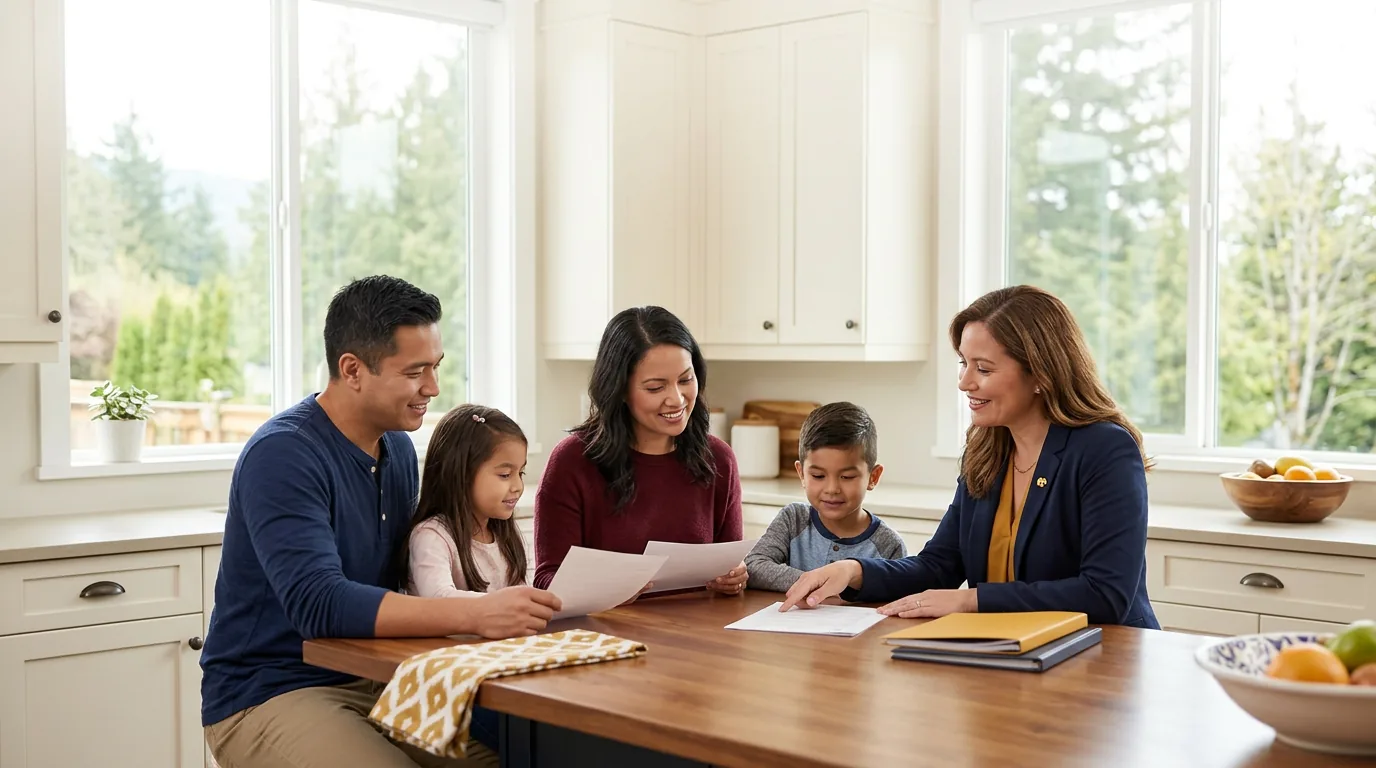
Last spring, a couple in Burnaby sat at their kitchen table with two browser tabs open. One was their bank's FHSA page. The other was an article about pulling money out of an RRSP under the Home Buyers' Plan. They'd been renting near Metrotown for six years, had some savings in both places, and kept asking the same question: which one are we supposed to use?
It's a fair question, and the honest answer is often "both, in the right order." But the details matter, because these two programs work very differently. Here's what the Canada Revenue Agency actually says, as of October 2026, and how that plays out for a first-time buyer in Vancouver or anywhere in BC.
The short version
- The FHSA (First Home Savings Account) is a registered account built only for buying a first home. Contributions are generally deductible, and a qualifying withdrawal for a home isn't added to your income.
- The Home Buyers' Plan (HBP) lets you borrow from your own RRSP to buy a first home. It's a loan to yourself, and you have to pay it back.
- You don't have to choose. The CRA states that you can withdraw under the HBP and make a qualifying FHSA withdrawal "for the same qualifying home, as long as you meet all of the conditions at the time of each withdrawal" (CRA, What is the Home Buyers' Plan).
So the real question isn't FHSA or HBP. It's how much to lean on each one.
How the FHSA works
According to the CRA, your FHSA participation room in the year you open your first FHSA is $8,000, and your lifetime contributions and transfers can't go over $40,000 (CRA, Contributing to your FHSA). Unused room carries forward, but only up to $8,000 a year. That means if you skip a year, you can catch up, but you can't stockpile years of room the way you can with a TFSA.
Here's a detail that catches people: room only starts building once you've opened the account. If you think you might buy in the next few years, opening an FHSA early, even with a small deposit, can matter more than the amount you put in on day one.
To open one, the CRA says you must be a resident of Canada, between 18 (or the age of majority) and 71, and a first-time home buyer. For FHSA purposes, that means you didn't live in a home you owned or jointly owned as your principal residence in the current calendar year or the previous four (CRA, Opening your FHSAs).
When it's time to buy, a qualifying withdrawal has conditions. Among them, per the CRA, you need a written agreement to buy or build a qualifying home with a completion date before October 1 of the year after the withdrawal, and you must intend to live there as your principal residence within one year of buying or building it (CRA, Withdrawals and transfers out of your FHSAs). Withdrawals that don't qualify are reported as income.
And if you never buy? The CRA says you can transfer FHSA money directly to your RRSP or RRIF without immediate tax, and that transfer won't use up your unused RRSP deduction room (same CRA page). That's a genuinely useful safety valve.
How the Home Buyers' Plan works
The HBP has been around much longer. As of the CRA's current page, the HBP withdrawal limit is $60,000 (CRA, What is the Home Buyers' Plan). That higher limit was announced in the federal Budget 2024 as "Increasing the Home Buyers' Plan limit to $60,000, to use RRSP savings for a first home."
The catch is repayment. The CRA says you have up to 15 years to pay the money back into your RRSP. Normally, repayments start the second year after your first withdrawal. Under temporary relief, people making a first withdrawal between January 1, 2022 and December 31, 2025 start repaying in the fifth year instead (CRA, How to repay HBP funds). The CRA's main HBP page says this relief has been extended to first withdrawals made between January 1, 2026 and December 31, 2028, with the example that a first withdrawal in 2026 means a first repayment year of 2031.
If you repay less than the minimum in a year, the CRA says the shortfall is included as RRSP income on line 12900 of your return. In other words, a missed repayment quietly becomes a tax bill.
Comparing the two side by side
| | FHSA | Home Buyers' Plan |
|---|---|---|
| Where the money comes from | A dedicated account you fund | Your existing RRSP |
| Limit (per CRA, 2026) | $8,000 a year, $40,000 lifetime | $60,000 withdrawal |
| Has to be paid back? | No | Yes, over up to 15 years |
| If you don't buy | Can transfer to RRSP/RRIF | Not applicable, money stays in RRSP |
So which should a first-time BC buyer use?
Here's how I'd think about it, not as a rule but as a starting point for a conversation.
If you're starting from scratch, the FHSA usually deserves first look. You get a deduction going in, no repayment coming out, and a fallback if plans change. Open it early so the room starts building.
If you already have a healthy RRSP, the HBP can add a lot to a down payment, especially at Metro Vancouver prices. Just go in with eyes open: every dollar you pull out is a dollar that isn't growing for retirement until you put it back, and the repayments become a fixed line in your budget alongside a new mortgage.
If you can use both, the CRA allows it for the same home. For a couple who each qualify, each person can open their own FHSA, so the household has more room to work with. Whether that's wise depends on your income, your timeline and how comfortable you'll be with HBP repayments once you're also carrying a mortgage.
What this doesn't tell you
I want to be straight about the limits here.
- Rules change. The HBP repayment relief has already been extended once since Budget 2024. Figures in this post are current as of October 2026 on CRA pages; check again before you act.
- The CRA pages don't decide for you. They explain the rules, not which choice is better for your tax bracket, your timeline or your family. Two people with the same savings can reasonably land in different places.
- Timing traps exist. The FHSA closes at the end of the year after your first qualifying withdrawal, or at the 15th anniversary of opening it, or at the end of the year you turn 71, whichever comes first (CRA, Closing your FHSA). Anything left after that point can become taxable income.
- I haven't covered everything. Spousal situations, people who've previously owned a home, and how either plan interacts with BC's own homebuyer programs are all worth a separate look with a professional.
- Investments inside either account can lose value. Neither the FHSA nor the RRSP guarantees a return. What you hold inside matters, especially if you're buying in the next year or two.
Sources
- Canada Revenue Agency. "First Home Savings Account (FHSA)." Page modified 2026. canada.ca
- Canada Revenue Agency. "Contributing to your FHSA." Page modified 2026. canada.ca
- Canada Revenue Agency. "Opening your FHSAs." Page modified 2026. canada.ca
- Canada Revenue Agency. "Withdrawals and transfers out of your FHSAs." Page modified 2026. canada.ca
- Canada Revenue Agency. "Closing your FHSA." 2026. canada.ca
- Canada Revenue Agency. "What is the Home Buyers' Plan." Page modified 2026. canada.ca
- Canada Revenue Agency. "How to repay the amounts withdrawn from your RRSPs under the Home Buyers' Plan." Page modified 2026. canada.ca
- Department of Finance Canada. "Budget 2024: Fairness for Every Generation, Chapter 1." 2024. budget.canada.ca
*This article summarises published rules for general information only. It's current as of October 12, 2026 and isn't personalized financial, tax or legal advice.*
Let's map out your first home together
If you're weighing an FHSA, the Home Buyers' Plan or both, I'm happy to walk through your numbers with you. I'm an independent broker based in Burnaby, I work with families across Metro Vancouver, and we can talk in English or Tagalog. Book a free, no-pressure call and we'll figure out what fits your plan.
Questions about your coverage?
I'm a licensed insurance and investment broker serving families across Burnaby, Vancouver, and Metro Vancouver. Book a free, no-pressure call and I'll help you find the right plan.
Book an appointment → Call (778) 651-0086